
Watch out for 'ghost references'
Fake citations haunt kids' science fair projects and professional journals

What’s a ghost reference?
“These are pieces of work that are not alive. They’re haunting us — sort of shambling on in their undead form.” — Ben Williamson, University of Edinburgh
Thank you, Ben Williamson, for my favorite quote that I’ve put into one of my stories this year!
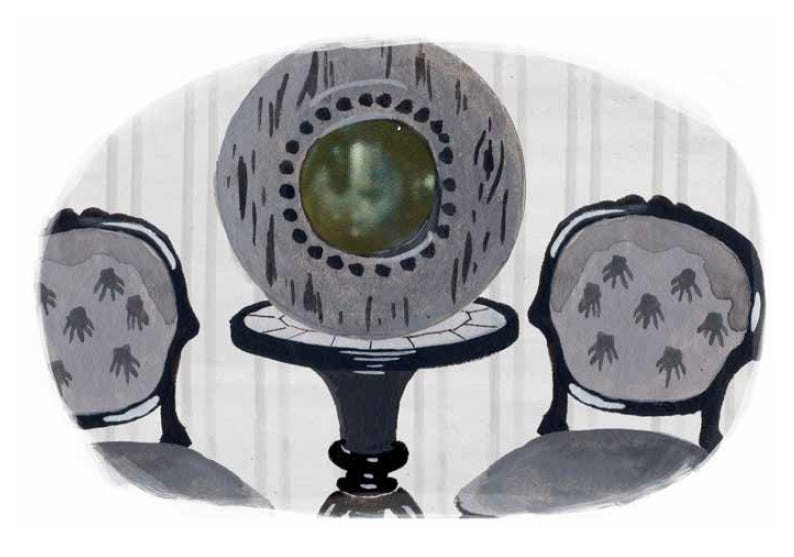
That quote gave me an excuse to pull some art from my very first book for kids, STRANGE BUT TRUE, which was about the science behind ghosts and other paranormal mysteries. (Do you see a ghostly child in that mirror? Is it really there, or is it all in your head?)
Read my story for Science News Explores about the growing problem with ghost references

Starting when ChatGPT first launched, people noticed that the chatbot tended to invent references to sources that don’t exist. In one early incident in 2023, two lawyers got fined for filing a brief that included references to cases that never happened — ChatGPT had made them up. Newer AI models are more likely to point to correct sources, but the problem with ghost references has not gone away.
And people are getting in trouble for using these references—even if it’s an innocent mistake. Read the full story.
What do you think this means for the future of science and human knowledge?
Quotes
“I try to keep advocating for us to be more curious about the information we find online.” — Jennifer Borgioli Binis, moderator on the subreddit AskHistorians
“AI is dangerous at all levels of learning.” — Ben Williamson, University of Edinburgh
“I think it’s bad advice to say that you should just stay away from chatbots completely… What are the things that we can trust them with and what are the things that we should be more cautious of?” — Mythreya Dharani, high school student and ISEF alum
Even the smartest people in the room can get lazy. If you use AI (I wouldn't), do your legwork and confirm sources with your own eyes.